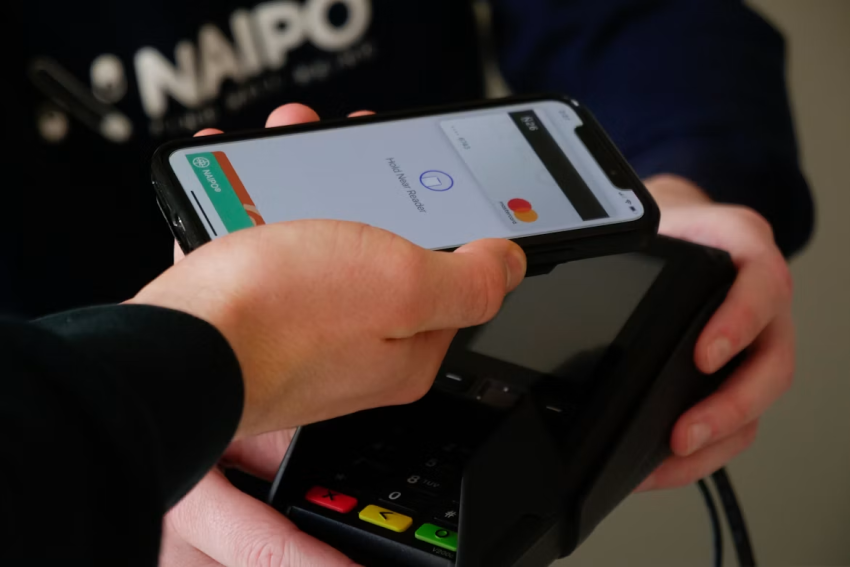
For many Filipinos, the smartphone has already become much more than a device for calls, messages, social media, and entertainment. It is a camera, navigation tool, banking terminal, shopping assistant, and connection to family and friends. Now, with Apple Pay officially available in the Philippines, the iPhone is gaining another role: a wallet.
Apple Pay launched in the Philippines in August 2026, allowing eligible cardholders from participating local banks to add their cards to Apple Wallet and use compatible Apple devices for contactless payments. At launch, supported financial institutions included UnionBank, GoTyme Bank, Metrobank, and China Bank.
The arrival is significant because Filipino consumers are already familiar with digital wallets, mobile banking, QR payments, and cashless transactions. Apple Pay is therefore not introducing the idea of digital payments from scratch. Instead, it is entering a market where people are already accustomed to paying with technology.
The bigger question is whether Apple Pay can change the everyday habits of Filipino iPhone users.
From Physical Wallets to Smartphones
The traditional Filipino wallet often contains several things at once: cash, bank cards, identification cards, loyalty cards, and receipts. For years, smartphones have gradually reduced the need to carry some of these items.
Digital banking apps have made it easier to transfer money and check balances. E-wallets have become common for online purchases, bills, transportation, food delivery, and other daily expenses. QR payments have also become increasingly familiar to consumers and merchants.
Apple Pay adds another option by allowing eligible bank cards to be stored digitally in Apple Wallet. Instead of taking out a physical card, an iPhone user can authenticate a payment and hold the device near a compatible contactless terminal.
That small change could have a surprisingly large effect.
For someone buying coffee before work, paying for lunch, shopping at a mall, or making a quick purchase at a convenience store, the phone is already in their hand. If the payment terminal accepts contactless transactions and the user’s bank card is supported, paying with the iPhone can become a natural extension of an activity they are already doing.
Why Apple Pay’s Arrival Matters in the Philippines
The timing is particularly interesting.
Filipino consumers have rapidly embraced digital financial services, but payment preferences remain diverse. Cash, bank cards, QR payments, mobile banking applications, and e-wallets can all exist within the same person’s daily routine.
Apple Pay does not necessarily replace these methods. Instead, it gives iPhone users another way to access their existing payment cards.
This distinction is important.
A Filipino consumer might still use an e-wallet when sending money to another person. They might use a banking app to transfer funds. They might use cash at a small neighborhood store. But when shopping at a modern retail location with a contactless terminal, tapping an iPhone could become the simplest option.
The convenience comes from reducing the number of steps between deciding to pay and completing the transaction.
The iPhone Becomes More Important
Apple Pay could also change the way consumers think about their iPhones.
The more functions a smartphone performs, the more important battery life becomes. A phone used for communication, navigation, photography, entertainment, banking, and payments has a very different role from a phone used mainly for calls and messages.
This makes battery condition more relevant to everyday financial convenience.
Imagine leaving home for an entire day with only an iPhone and a few other essentials. The phone may be used for navigation during the morning commute, messaging throughout the day, taking photos, browsing social media, checking bank accounts, and making purchases. If the device runs out of power, the problem is no longer simply that the user cannot browse Instagram or watch videos.
They may also lose access to important digital services.
That is why consumers who rely heavily on their phones for payments may pay more attention to their iphone battery condition. A healthy battery can help ensure that the device remains available when it is needed for transportation, communication, authentication, and payment.
Convenience Could Be the Biggest Advantage
The strongest argument for Apple Pay is simple: convenience.
Filipinos who already carry an iPhone do not need to carry another payment device. Once an eligible card is added to Apple Wallet, making a contactless payment can become a quick process.
There is also a psychological advantage.
People often hesitate before changing established financial habits because payment is something that needs to feel reliable. Consumers want to know that their transaction will work, their card information will be protected, and they will not accidentally pay the wrong amount.
Apple Pay’s integration into the Apple ecosystem may make the experience feel familiar to existing iPhone users.
Instead of learning an entirely new payment platform, they can access the payment function through a device and interface they already understand.
Security Is Another Major Consideration
Security will be an important part of the conversation as Apple Pay grows in the Philippines.
Smartphone payments naturally raise questions. What happens if an iPhone is lost? Can another person use the stored card? Is the actual card number exposed during a transaction?
Apple Pay is designed around device authentication and tokenized payment information rather than simply handing a physical card number to every merchant. Apple says users can authenticate payments using supported device security features, while the payment process is designed to avoid sharing the actual card number with merchants.
For Filipino consumers who are becoming increasingly comfortable with online banking, this type of security could make contactless payments more attractive.
However, users should still follow basic digital-security practices. A strong device passcode, updated software, careful handling of financial notifications, and immediate action after losing a phone remain important.
Convenience should never mean ignoring security.
Not Every Filipino Consumer Will Switch Immediately
Despite the excitement, Apple Pay is unlikely to replace cash, e-wallets, or QR payments overnight.
One reason is availability.
Apple Pay depends on participating banks and eligible cards. The initial Philippine rollout was relatively limited compared with the country’s entire banking sector. Local reporting identified four banks at launch, while other financial institutions have been expected to expand support over time.
Merchant acceptance is another factor.
A consumer can only make a contactless Apple Pay transaction where compatible payment infrastructure exists. Large shopping centers, modern retailers, restaurants, and other businesses with contactless terminals may provide a smoother experience than smaller establishments that still rely heavily on cash or QR-based payments.
This means Apple Pay’s growth will depend not only on iPhone ownership but also on the expansion of supporting banks and merchant infrastructure.
The Filipino Lifestyle Could Be a Strong Fit
There is nevertheless a strong reason to believe Apple Pay can find a place in the Philippine market.
Filipino consumers are highly connected. Smartphones play a central role in social interaction, entertainment, shopping, work, and financial activity.
For younger consumers in particular, carrying a smartphone everywhere is already normal. If the smartphone can also function as a convenient payment device, there is little reason to leave it behind.
The Philippines also has a large overseas Filipino workforce and millions of households that regularly interact with digital financial services. As more consumers become comfortable managing money through smartphones, adding contactless card payments to that ecosystem becomes a logical next step.
Apple Pay could therefore benefit from an existing digital-payment culture rather than having to create one.
What About Battery Life?
There is an interesting side effect to this shift.
As smartphones become financial tools, battery management becomes increasingly important.
People already worry about battery life when traveling, attending concerts, working outside the home, or using navigation. Adding payment to the list makes the phone even more central to everyday life.
A user with an aging iphone battery may notice that the device cannot comfortably last through a full day of heavy use. For someone who depends on the phone for payments, this can create additional inconvenience.
That does not mean consumers need to replace their phones simply because Apple Pay is available. Battery-saving features, portable chargers, and sensible charging habits can help extend daily usability.
But it does highlight a broader trend: smartphone battery performance is becoming connected to more aspects of everyday life.
Apple Pay Could Also Change Merchant Expectations
Consumer behavior is only half of the story.
If more Filipino customers begin asking whether a store accepts Apple Pay or other contactless payment services, merchants may have greater incentive to support modern payment terminals.
This could gradually improve the overall contactless payment environment.
A restaurant, coffee shop, supermarket, or retail store does not necessarily need to create a completely separate payment system for every smartphone brand. Supporting established contactless card infrastructure can allow multiple compatible services to work through the same terminal.
That could make digital payments more seamless for both consumers and businesses.
The result could be a gradual shift rather than a dramatic revolution.
Competition Will Keep the Market Interesting
Apple Pay is also entering a market where it will not operate alone.
Filipino consumers already have access to major digital wallets, banking applications, QR payment systems, and other forms of electronic payment. These services have built strong habits among local users.
Apple therefore has to compete on more than brand recognition.
The real test will be whether consumers consider Apple Pay easier than the payment tools they already use.
If tapping an iPhone is faster than opening an app, scanning a QR code, entering information, or taking out a physical card, Apple Pay has a clear advantage in certain situations.
But if a user prefers an e-wallet for rewards, transfers, promotions, or broader merchant coverage, that service may remain the preferred option.
In other words, Filipino consumers are unlikely to choose only one payment method.
A New Role for the iPhone
Apple Pay’s arrival may ultimately be less about replacing wallets and more about expanding what the iPhone represents.
The smartphone is already a personal communication center, entertainment device, camera, navigation system, banking tool, and shopping platform. Payments are another piece of that puzzle.
The recent launch of the iPhone 18 Pro and Apple’s first foldable iPhone Duo has also placed renewed attention on how smartphones are evolving into increasingly powerful personal devices. Apple unveiled the iPhone Duo and iPhone 18 Pro lineup at its September 2026 event, highlighting new hardware, cameras, processing power, and battery improvements.
As phones become more capable, consumers may increasingly expect them to handle everyday tasks that once required separate objects.
That could make reliable battery performance even more valuable. A phone that serves as a wallet, map, camera, communication device, and entertainment center needs to remain available throughout the day. For heavy users, maintaining a healthy iphone battery can therefore become part of maintaining access to their digital lifestyle.
Will Apple Pay Change Everyday Payments in the Philippines?
The answer is likely to be yes, but gradually.
Apple Pay will not eliminate cash, QR payments, digital wallets, or traditional bank cards. The Philippine payment ecosystem is too diverse for one service to replace everything.
Instead, Apple Pay could introduce a new habit among iPhone users: reaching for the phone instead of the wallet.
That sounds like a small change, but small changes in payment behavior can become powerful when repeated every day.
A morning coffee, a quick lunch, a supermarket purchase, a shopping trip, or a restaurant bill can all become opportunities to use a phone as a payment device. As more banks support Apple Pay and more merchants accept contactless payments, those small moments could gradually add up.
For Filipino iPhone users, the biggest change may not be technological at all. It may simply be realizing that the device already sitting in their hand can do one more important job.
And as smartphones become increasingly central to everyday life, keeping that device reliable — including maintaining a dependable iphone battery — could become just as important as carrying a physical wallet once was.