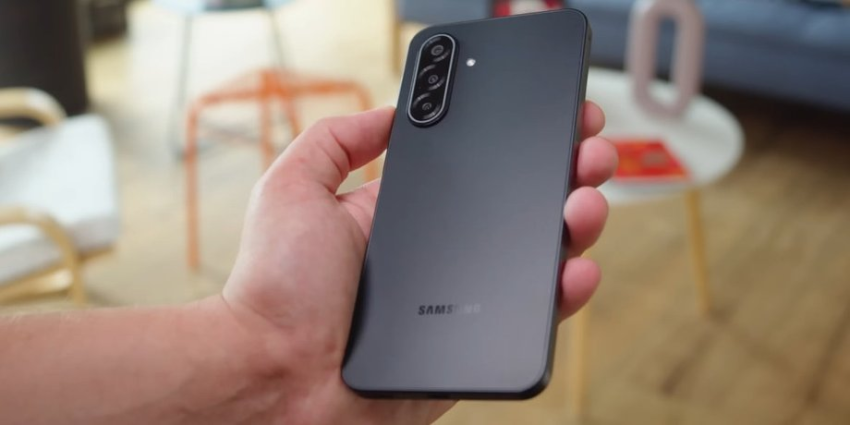
A New Galaxy A18 Is Drawing Attention
The budget smartphone market in the Philippines is once again becoming a major focus of the technology industry. On September 17, 2026, Samsung officially introduced the Galaxy A18 4G in selected European markets, giving consumers an early look at the company’s latest entry-level Galaxy A device. Philippine technology media have already begun covering the phone, making it a natural topic for Filipino smartphone users who closely follow Samsung’s affordable Galaxy lineup.
The Galaxy A18 4G is positioned above the Galaxy A08 in Samsung’s entry-level range. While it does not represent a radical redesign, it brings several meaningful changes compared with the previous generation, including a new Exynos 1610 chipset, a 90Hz Super AMOLED display, an IP64 rating, and a promise of six years of operating system updates and security patches.
For Filipino consumers, these features are interesting because affordable smartphones are no longer expected to perform only basic tasks. A budget phone today may be used for online classes, mobile banking, social media, video calls, streaming, photography, navigation and mobile gaming all within the same day.
That makes the Galaxy A18 4G more than just another entry-level model. It represents the continuing shift toward longer-lasting and more capable affordable smartphones.
A 6.7-Inch AMOLED Display Targets Everyday Entertainment
One of the Galaxy A18 4G’s most noticeable specifications is its 6.7-inch Full HD+ Super AMOLED display with a 90Hz refresh rate. The resolution is 2340 x 1080 pixels, while the screen uses a traditional waterdrop-style notch for the front camera.
A large AMOLED display can be particularly useful for Filipino users who spend considerable time watching videos and browsing social platforms on their phones.
Instead of relying on a small screen for TikTok videos, YouTube content, Facebook feeds or messaging, users can enjoy a larger viewing area. The 90Hz refresh rate can also make scrolling through websites, menus and social media feeds feel smoother than traditional 60Hz displays.
For students and younger consumers, a larger display can also be useful for reading digital learning materials, joining video conferences and reviewing documents.
The screen therefore fits the way modern smartphones are used in everyday Philippine life. A phone is no longer simply a communication device. It is increasingly a portable entertainment center, classroom, camera and digital wallet.
Performance Moves to Exynos
Samsung has replaced the MediaTek Helio G99 used in the Galaxy A17 4G with its own Exynos 1610 chipset in the new model. The company has not yet provided every detailed technical specification of the new chip, but the change represents a notable hardware update for the Galaxy A series.
For everyday users, chipset performance is not simply about benchmark numbers.
What matters is how quickly applications open, how smoothly social media runs, whether video calls remain stable, and whether the phone can handle several common applications during a busy day.
In the Philippines, where smartphones can serve as primary digital devices for many users, these everyday experiences are particularly important.
A consumer might start the morning checking messages, use a navigation app while traveling, watch videos during a break, transfer money through a mobile payment service and finish the evening with a few rounds of a mobile game.
A phone needs to handle all of these tasks without feeling like it was designed only for occasional use.
The Battery Remains Central to the Smartphone Experience
The Galaxy A18 4G comes with a 5,000mAh battery and supports 25W wired charging.
Battery capacity has become an increasingly important specification for affordable smartphones because consumers often expect a device to last through an entire day of mixed usage.
For Filipino users, this can be especially relevant when smartphones are used away from home for long periods. Commuting, studying, working, shopping, streaming and communicating can all place different demands on a phone.
This is where the idea of a reliable smartphone battery becomes more important than simply looking at a number printed on a specification sheet. Battery performance depends on display brightness, mobile connectivity, applications, gaming, camera use and charging habits.
A 5,000mAh capacity gives the Galaxy A18 4G a solid starting point, but actual endurance will naturally vary from user to user.
Someone who spends hours watching videos and playing games may consume power much faster than someone who primarily uses messaging, web browsing and occasional photography.
Long-Term Software Support Could Matter More Than Raw Specifications
Perhaps one of the Galaxy A18 4G’s most interesting features is Samsung’s promise of six years of operating system updates and security patches, extending through October 2032 according to current reporting.
This is significant because affordable phones are increasingly expected to remain useful for several years.
For Filipino consumers who want to avoid replacing their phones frequently, long-term software support can be just as important as processor speed or camera resolution.
A phone purchased today may still be used several years later for banking applications, school platforms, social media, work communication and online services. Continued security updates can therefore become an important part of the ownership experience.
The Galaxy A18 4G launches with Android 17 and One UI 9, giving the device a relatively modern software foundation from the beginning.
This approach also reflects a broader trend in the smartphone industry: manufacturers are increasingly competing not only on hardware specifications but also on how long a device remains supported.
Cameras Designed for Everyday Filipino Moments
The Galaxy A18 4G features a 50MP main camera, a 5MP ultrawide camera and a 2MP macro camera, while the front camera is 13MP.
These specifications place the phone firmly in the mainstream affordable smartphone category.
For Filipino users, however, camera specifications can have a practical meaning beyond photography enthusiasts.
Smartphones are frequently used to capture family gatherings, food, travel, school activities, local events and everyday moments. Social media has also turned smartphone photography into a normal part of daily communication.
The ultrawide camera can be useful when users want to capture larger groups or scenery, while the main camera is likely to handle most everyday shots.
This makes the camera system another reason why affordable smartphones have become much more capable than earlier generations.
Storage Flexibility Is Still Valuable
The Galaxy A18 4G supports 128GB or 256GB of internal storage, with expandable storage through a hybrid microSD slot, supporting capacities of up to 2TB according to Samsung’s listed specifications reported by YugaTech.
Expandable storage remains useful for consumers who take many photos, download videos or keep large collections of documents and applications.
Although cloud storage has become increasingly common, local storage can still be convenient for users who want offline access to their files.
For students, creators and travelers, the ability to expand storage can also reduce the pressure to constantly delete old photographs and videos.
Durability Gets a Small but Meaningful Upgrade
Another change is the Galaxy A18 4G’s IP64 rating for dust and splash protection.
This does not make the phone waterproof, but it adds another layer of protection for everyday situations.
For people moving between different environments, protection against dust and splashes can be useful. Smartphones are carried through public transportation, shopping areas, schools, workplaces and outdoor locations every day.
A little additional protection can therefore contribute to long-term usability.
This is particularly relevant to budget buyers because durability can affect how long a phone remains practical before needing to be replaced.
What Filipino Buyers May Watch Next
The biggest question for the Philippine market is not only what the Galaxy A18 4G offers, but when and at what price it will become available locally.
At present, the phone has been officially listed in selected European markets, with a reported starting price of around €280 in France for the 4GB RAM and 128GB configuration. There is not yet a confirmed Philippine launch price in the current local reporting.
That distinction matters.
Philippine smartphone buyers are highly familiar with comparing specifications against actual retail prices. A device can look attractive on paper, but its position in the local market will ultimately depend on its Philippine pricing, availability, promotions and competition.
Samsung already operates in a highly competitive environment where brands such as Xiaomi, Redmi, realme, OPPO, vivo, Infinix and TECNO offer a wide range of affordable smartphones.
The Galaxy A18 4G will therefore enter a market where consumers have plenty of alternatives.
Battery Life Could Shape the Daily Experience
As smartphones become more powerful, battery efficiency becomes increasingly important.
A faster processor, brighter display, higher refresh rate, stronger mobile connectivity and more demanding applications can all increase energy consumption. This makes battery management a key part of the overall smartphone experience.
For anyone considering a new affordable Galaxy phone, checking the health and long-term condition of the smartphone battery should also become part of the ownership conversation.
Battery capacity naturally does not remain exactly the same forever. Usage patterns, charging habits, heat exposure and the age of a device can all influence battery performance over time.
The Galaxy A18 4G’s 5,000mAh battery gives it a substantial capacity from the beginning, but responsible daily usage will still matter for maintaining a consistent experience.
Why the Galaxy A18 4G Matters in the Philippines
The importance of the Galaxy A18 4G is not simply about one new Samsung smartphone.
It reflects a broader transformation in the affordable smartphone segment.
Filipino consumers increasingly expect entry-level and midrange phones to offer features that were once associated mainly with expensive models. Large AMOLED displays, higher refresh rates, multi-camera systems, long-term software support and sizeable batteries are becoming part of the mainstream smartphone conversation.
At the same time, consumers are becoming more aware of the total ownership experience.
A phone that performs well on its first day is useful, but a phone that remains functional, secure and dependable for years can offer a very different experience.
This is why software support, durability and battery performance deserve as much attention as processor names and camera megapixels.
The Next Chapter for Affordable Galaxy Phones
The Galaxy A18 4G arrives at an interesting moment for the smartphone industry.
Premium phones continue to push advanced cameras, foldable displays and increasingly sophisticated software. At the same time, affordable phones are becoming more capable and more durable.
For Philippine consumers, this creates more choices.
The Galaxy A18 4G brings a 6.7-inch 90Hz Super AMOLED display, an Exynos 1610 chipset, a 5,000mAh battery, 25W charging, a 50MP main camera, IP64 protection and six years of promised software and security updates.
Its eventual impact in the Philippines will depend heavily on local availability and pricing, neither of which has been fully confirmed at the time of writing.
But the direction is already clear. Affordable smartphones are no longer competing only on price. They are competing on longevity, display quality, cameras, software support and everyday reliability.
For consumers who keep their phones for several years, those factors can matter enormously.
And as smartphones become even more central to work, entertainment, communication and digital services in the Philippines, the humble smartphone battery will remain one of the most important components behind the experience.