A Philippine Invention Brings New Hope to Kidney Patients
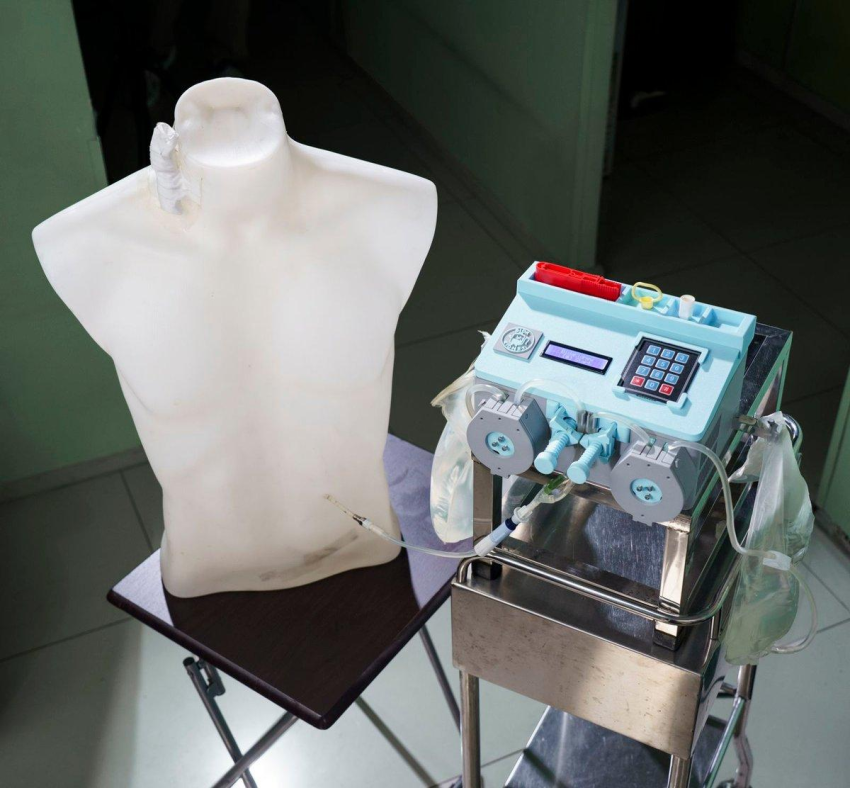
A promising Filipino invention is drawing international attention by addressing one of the country’s most pressing healthcare challenges: making essential treatment more accessible to people living with chronic kidney disease. BiDaKidney, a low-cost, semi-automated peritoneal dialysis machine developed by University of the Philippines Diliman graduates Andrew Jacob Buensalido and Allyson Cabrestante, has advanced to the Global Top 20 of the James Dyson Award 2026.
The achievement, reported in October 2026, highlights how Filipino engineers are developing practical solutions to problems experienced by patients and families every day. Rather than focusing exclusively on sophisticated hospital equipment, the project explores how engineering can simplify treatment routines and potentially make home-based care more manageable.
For a country made up of thousands of islands, access to healthcare is not simply a question of whether a medical facility exists. Distance, transportation costs, household income, and the availability of trained healthcare professionals can all influence whether patients receive consistent treatment. Innovations such as BiDaKidney therefore represent an important conversation about how technology can respond to the Philippines’ unique healthcare needs.
Why Kidney Care Remains a Major Concern in the Philippines
Chronic kidney disease can place a substantial burden on patients, caregivers, hospitals, and household budgets. As kidney function declines, some patients require dialysis to remove excess fluid and waste products from their blood. Treatment may become a long-term commitment that affects employment, family responsibilities, travel, and quality of life.
The scale of the challenge is significant. According to information published by the Philippine Information Agency in June 2026, more than 64,000 Filipinos received dialysis treatment in 2024. Health authorities have also highlighted the importance of earlier screening, public education, and improved access to specialist services.
For patients living in Metro Manila or other urban centres, reaching a dialysis facility may be relatively straightforward compared with the experience of people in remote provinces. Residents of island communities and geographically isolated areas may face additional journeys involving buses, boats, or several transfers before reaching a treatment centre.
These difficulties can create expenses beyond the treatment itself. Families may need to pay for transport, meals, accommodation, and time away from work. Even when healthcare benefits help cover treatment, getting to a facility can remain a considerable practical challenge.
This is why locally developed medical technology deserves attention. By examining the daily experiences of patients, Filipino innovators can identify opportunities to make existing treatment methods easier to manage without assuming that every community has the same resources.
What Makes BiDaKidney Different?
BiDaKidney is designed to simplify important parts of peritoneal dialysis, a treatment that uses the lining of the abdomen to help remove waste and excess fluid from the body. Unlike conventional haemodialysis, which generally requires patients to visit a treatment centre or use a specialised home system, peritoneal dialysis can be performed at home by appropriately trained patients under medical supervision.
However, conventional manual peritoneal dialysis still requires repeated exchanges of dialysis fluid, careful handling of tubing, monitoring of fluid volumes, and record-keeping. These tasks can be tiring and may create opportunities for mistakes or contamination if proper procedures are not followed.
The Filipino-designed prototype addresses several of these practical difficulties through a controlled pump, weight sensors, and a dual-tube clamp. The pump moves dialysis fluid through standard tubing, while sensors help monitor the amount of fluid transferred. The clamp is designed to control flow and help prevent leakage or backflow.
The developers have focused on automating essential functions rather than reproducing every feature of expensive commercial dialysis systems. The project is intended to complement manual peritoneal dialysis, offering a possible middle ground between a highly manual process and more costly automated equipment.
According to the project’s James Dyson Award profile, the device is designed to be compact and lightweight, weighing approximately 2.5 kilograms. It also works with commonly available peritoneal dialysis supplies rather than relying on a completely proprietary consumable system.
These design choices are particularly relevant to price-sensitive healthcare environments. In the Philippines, an innovation’s value depends not only on what it can do but also on whether patients, hospitals, and healthcare programmes could realistically afford and maintain it.
Why Home-Based Treatment Matters for Filipino Families
Home-based healthcare can offer practical advantages when it is appropriate for a patient’s condition and supported by qualified professionals. Reducing repeated journeys to a treatment centre may give patients more flexibility and help families manage their daily responsibilities.
For people in rural areas, even a small reduction in travel requirements can make a meaningful difference. A patient who spends several hours travelling to receive care may have less time for work, education, childcare, or rest. Caregivers can face similar pressures when accompanying relatives to appointments.
Home-based peritoneal dialysis does not eliminate every challenge. Patients need suitable living conditions, clean treatment areas, reliable supplies, appropriate training, and access to medical support. Healthcare teams must also determine whether a particular treatment method is safe and suitable for each individual.
Nevertheless, the possibility of simplifying established treatment routines is worth exploring. If carefully tested and eventually made available at an appropriate cost, devices like BiDaKidney could help patients manage some aspects of treatment with greater convenience.
The central question is not whether technology can replace healthcare professionals. It is whether thoughtful engineering can help patients follow their prescribed care more consistently while allowing medical teams to concentrate on monitoring health, preventing complications, and providing guidance.
The Role of Reliable Power in Medical Devices
As medical equipment becomes more compact and automated, reliable power management becomes an important engineering consideration. Electronic pumps, sensors, displays, and control systems must operate predictably, particularly when their functions are connected to a patient’s treatment routine.
This makes the design of a suitable medical battery an important consideration for portable and home-based medical equipment in general. Depending on the device, engineers may need to evaluate operating time, electrical stability, charging requirements, temperature tolerance, and safeguards against power interruptions.
However, battery requirements vary considerably between medical products. A portable monitoring device, for example, may have very different power needs from a dialysis system that operates pumps and electronic controls. The BiDaKidney project should not be assumed to use a battery-powered configuration unless its developers confirm that design.
For medical devices intended for Filipino households, engineers may also need to consider local electricity reliability, the availability of replacement components, and the practical cost of maintenance. In communities where outages occur, power planning may form part of a broader strategy that includes backup electricity, clear operating instructions, and appropriate emergency procedures.
These considerations demonstrate why medical engineering involves more than designing a device that works in a laboratory. Equipment must be evaluated in realistic settings, with careful attention to how patients and caregivers will use it.
Affordability Could Be as Important as Innovation
An impressive prototype does not automatically become an accessible healthcare product. Its real-world impact depends on manufacturing costs, quality control, clinical evaluation, regulatory requirements, distribution, maintenance, and training.
For a developing healthcare market, affordability can be especially important. A device may offer useful features but remain out of reach if its price is too high or if replacement parts are difficult to obtain. Conversely, a simpler design using widely available supplies may offer a more practical path towards broader access, provided it meets the necessary safety and performance standards.
BiDaKidney’s emphasis on essential automation reflects this challenge. Its design aims to simplify important tasks without reproducing all the complex features of high-end commercial systems.
The next stages of development will be crucial. The project’s published profile identifies further work on usability, product design, electronics integration, formal clinical testing, and broader patient evaluation. These steps will help establish whether the concept can move beyond a promising prototype.
Healthcare institutions, engineers, medical specialists, manufacturers, and potential funding partners could all have roles in that process. Their collaboration would help determine how the device should be tested, manufactured, supported, and potentially integrated into existing care pathways.
Medical Technology Must Work Beyond Major Cities
The Philippines’ geography creates a particular challenge for healthcare innovation. A technology that performs well in a major hospital may require additional adaptation before it can be used reliably in a rural clinic or household.
Connectivity is one consideration. Remote consultations and digital monitoring may help healthcare professionals follow up with patients, but internet access and mobile coverage vary across communities. A medical device should therefore not depend on continuous connectivity unless that requirement is appropriate and clearly supported by the care system.
Training is equally important. Patients and caregivers need understandable instructions, accessible support, and clear guidance about when to contact a healthcare professional. Devices should be designed around actual user needs rather than assuming that every household has technical expertise.
Maintenance also matters. A system that requires specialised repairs or difficult-to-source components could become less useful over time, particularly outside large urban centres. Locally available support and practical maintenance arrangements can help ensure that promising technology remains useful after its initial introduction.
For Filipino innovators, designing with these conditions in mind could become a competitive advantage. Understanding local needs can lead to solutions that are not only inventive but also relevant to other countries facing similar barriers to healthcare access.
Building Trust Through Safety and Clinical Testing
Medical technology must meet a higher standard than ordinary consumer electronics. A product that appears convenient or affordable cannot be considered ready for widespread use without suitable evidence of safety and effectiveness.
For a dialysis-related device, evaluation needs to consider fluid delivery, measurement accuracy, flow control, potential leakage, contamination risks, and the consequences of equipment malfunction. Human factors are also essential: patients must be able to understand the controls, recognise problems, and follow the treatment plan prescribed by their healthcare team.
Power-related safeguards deserve similar attention wherever electrical components are involved. A properly selected medical battery, if a device requires one, must be compatible with its electrical design and operating conditions. Battery protection, charging safety, service life, and clear replacement procedures can all matter in the appropriate application.
These engineering considerations should be supported by testing, documentation, professional oversight, and compliance with relevant Philippine regulatory requirements. International recognition can help an invention gain visibility, but an award shortlist is not the same as clinical approval or proof that a device is ready for routine patient use.
For patients and families, that distinction is important. Hope is valuable, but it should be accompanied by transparent evidence and responsible communication about what a technology can and cannot do.
A New Generation of Filipino Problem-Solvers
BiDaKidney’s progress also reflects the potential of Philippine universities to contribute to practical, socially relevant innovation. Its developers drew inspiration from difficulties experienced by dialysis patients, turning observations about everyday care into an engineering project.
This approach is significant because many healthcare challenges do not require technology to become more complicated. Sometimes the greatest opportunity lies in making an existing process easier to perform, reducing unnecessary steps, or improving how information is measured and recorded.
The James Dyson Award provides international exposure that may help the team connect with experts and organisations capable of supporting further development. The project will need continued technical work and rigorous evaluation, but its recognition offers a platform for discussing a real healthcare need.
Other Filipino students and researchers may find inspiration in this model of problem-solving. Projects focused on affordable diagnostics, rehabilitation equipment, remote monitoring, accessible assistive technology, and reliable medical power systems could also respond to needs in local communities.
The broader lesson is that meaningful innovation begins with understanding the people who will use a product. Engineering skills become most valuable when they are combined with empathy, practical research, and a clear understanding of real-world constraints.
Looking Ahead: Turning Promise Into Patient Benefits
The international recognition of BiDaKidney places Filipino medical innovation in the spotlight at a time when access to kidney care remains a serious concern. Its focus on simplifying peritoneal dialysis offers a promising example of how local engineering can address a specific problem faced by patients and caregivers.
Still, the path from prototype to everyday healthcare involves substantial work. Clinical testing, regulatory compliance, manufacturing quality, affordability, training, and ongoing technical support will determine whether the design can eventually deliver dependable benefits.
Future medical devices will also need to account for the practical details of home use, including electrical safety where applicable. For products that rely on stored electrical energy, a dependable medical battery may be one component of a broader system designed around safe operation and reliable care.
Ultimately, the most important measure of success will not be awards or headlines alone. It will be whether a proven, affordable, and properly supported technology helps patients receive appropriate treatment with fewer practical barriers.
BiDaKidney’s journey offers a compelling reminder that Filipino innovation can begin with a simple but powerful question: how can an essential part of healthcare become easier for the people who need it most? The answer will require collaboration, evidence, and sustained investment, but the potential reward is clear—a future in which useful medical technology reaches more communities and helps patients manage demanding treatment routines with greater confidence.