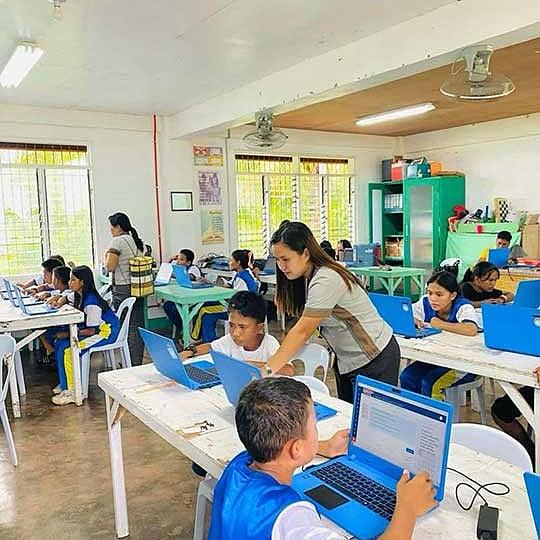
A New Chapter for Philippine Education
Artificial intelligence is becoming an increasingly important part of education, and the Philippines is taking another step toward helping teachers adapt to this rapidly changing digital landscape. In October 2026, Google launched its Google AI Educator Series, a free online training initiative developed in partnership with the Department of Education (DepEd), the Commission on Higher Education (CHED), and the Technical Education and Skills Development Authority (TESDA).
The program introduces Filipino educators to practical applications of artificial intelligence, including lesson planning, classroom activities, research, and administrative work. Its self-paced modules are designed to fit into teachers’ busy schedules, making professional development more accessible to educators across different educational levels. Participants can also earn digital badges as they complete the training.
This development arrives at an important moment for the Philippine education system. Teachers are expected to prepare students for a world increasingly shaped by digital tools, online communication, and emerging technologies. At the same time, they must manage classroom responsibilities, prepare learning materials, evaluate assignments, and support students with different learning needs.
AI could help ease some of these pressures. However, making that promise a reality requires more than introducing a new application. Teachers need appropriate training, reliable devices, dependable internet access, and clear guidance on how to use technology responsibly.
Why AI Training Matters for Filipino Teachers
Teaching involves far more than standing in front of a classroom and explaining a lesson. Educators spend considerable time preparing worksheets, designing activities, reviewing student performance, and adapting materials to different levels of understanding.
For teachers working in busy public schools, these responsibilities can leave limited time for individual student support. AI tools may help by generating preliminary lesson outlines, suggesting discussion questions, organizing research materials, and proposing alternative explanations for complicated concepts.
For example, a mathematics teacher could use an AI assistant to develop several practice questions on fractions, each with a different level of difficulty. An English teacher might request ideas for reading comprehension exercises based on a familiar local setting. A science teacher could use AI to brainstorm classroom demonstrations that explain electricity, weather systems, or environmental protection.
These suggestions still require professional review. AI-generated information can contain errors, overlook important context, or produce examples that are unsuitable for a particular class. Teachers must therefore evaluate the material before introducing it to students.
The Google AI Educator Series offers a practical starting point for educators who want to understand how these tools work. Its emphasis on classroom applications, research, privacy, and academic integrity reflects a broader need to ensure that technological progress supports educational quality rather than simply increasing the number of digital tools used in schools.
Making Digital Learning More Accessible Across the Philippines
One of the biggest challenges in Philippine education is ensuring that technological opportunities reach students and teachers beyond major urban centers.
Schools in Metro Manila may have access to a wider range of technology suppliers, training opportunities, and technical support. Educators in remote communities, mountainous areas, and island provinces can face different circumstances. Internet reliability, device availability, and the cost of maintaining digital equipment can influence whether online learning tools are practical in everyday classrooms.
Free online training can reduce the financial barrier to professional development, but it cannot eliminate every obstacle. Teachers still need devices that can run modern applications, stable connections when accessing online materials, and sufficient time to complete training.
A school that relies on a small number of shared computers may find it difficult to integrate AI into regular lessons. Similarly, teachers who depend on older laptops may encounter slow performance when opening multiple browser tabs, managing digital documents, and participating in online training sessions.
These practical details matter because digital inclusion is not simply about whether a school has an internet connection. It is also about whether teachers and students can use that connection effectively, consistently, and affordably.
Why Reliable Laptops Remain Essential
Although AI receives much of the attention, the laptop remains one of the most useful tools for teachers who prepare lessons, organize records, conduct research, and communicate with students.
A dependable computer allows educators to move between presentation software, online learning platforms, spreadsheets, digital libraries, and AI assistants without repeatedly switching devices. For teachers who work from home after school hours, portability and battery performance can be especially important.
The right equipment does not necessarily need to be expensive. A laptop with sufficient memory, a responsive processor, a comfortable keyboard, and reliable connectivity may meet many everyday teaching needs without requiring a premium model. Schools and individual educators should consider their actual workloads before spending money on advanced hardware.
Battery condition also deserves attention. A computer that frequently needs to be plugged in can become inconvenient during staff meetings, training workshops, classroom demonstrations, or unexpected power interruptions.
When evaluating a laptop battery, buyers should check compatibility with the exact computer model, the manufacturer’s specifications, and the condition of the charging system. Replacing a worn battery may be more economical than purchasing a new laptop, provided that the rest of the computer remains suitable for the user’s needs.
For educators who regularly carry their equipment between home, school, and training venues, dependable battery performance can make digital teaching more flexible. It also reduces the need to search constantly for an available electrical outlet during a busy working day.
AI Can Support Teachers Without Replacing Them
A common concern surrounding artificial intelligence is whether automated systems could eventually replace human educators. In the Philippine context, a more useful question is how AI can support teachers while preserving the relationships that make education effective.
Technology can help organize information, generate ideas, and reduce repetitive tasks. It cannot fully reproduce a teacher’s understanding of a student’s circumstances, emotional needs, language background, or personal development.
Consider a student who repeatedly struggles with a reading assignment. An AI assistant might suggest simpler vocabulary exercises or alternative explanations. However, the teacher is better positioned to determine whether the difficulty comes from unfamiliar words, a lack of confidence, limited reading practice, or another challenge.
The same principle applies to classroom assessment. AI can help produce draft questions or summarize common mistakes, but educators should remain responsible for evaluating student work, identifying misunderstandings, and deciding what support each learner needs.
The best use of AI is therefore collaborative. Teachers contribute judgment, empathy, subject knowledge, and local context, while digital tools can help with preparation and information management.
This balance is particularly important in schools where personal interaction plays a central role in helping students stay engaged and motivated.
Protecting Student Privacy in AI-Powered Classrooms
The growing use of AI in education also creates new responsibilities for schools. Teachers may be tempted to paste student essays, examination results, personal information, or classroom records into online tools to obtain faster feedback.
Doing so without appropriate safeguards could expose sensitive information. Schools need clear policies explaining which tools may be used, what information can be entered, and how student data should be protected.
A safer approach is to remove identifying details before using AI to review sample work. Teachers can ask a tool to suggest feedback for an anonymous paragraph rather than uploading a complete student record containing names and personal information.
Educators should also verify the privacy settings and data-handling practices of the services they use. Free access does not automatically mean that a platform is appropriate for every educational purpose.
Academic integrity deserves equal attention. Students should understand when AI assistance is permitted, when independent work is required, and why submitting machine-generated answers as their own work can undermine learning.
Rather than banning every AI tool without explanation, schools can teach students to evaluate generated information, acknowledge permitted assistance, check sources, and develop their own arguments.
These skills will become increasingly valuable as AI-generated content becomes more common across education, employment, and everyday communication.
The Digital Divide Includes Hardware Costs
Even when educational software is free, the devices required to use it can represent a substantial expense for teachers and families.
In the Philippines, where household budgets vary considerably, buying a new computer solely to access digital learning opportunities may not be realistic for everyone. This makes device maintenance, repair services, shared computer facilities, and affordable hardware options important parts of the digital education discussion.
Before replacing an older laptop, educators should determine whether its limitations come from software requirements, insufficient memory, storage problems, overheating, or battery degradation. Different problems require different solutions.
For example, a computer that performs well while plugged in but shuts down quickly when disconnected may have a battery-related problem rather than a processor limitation. By contrast, a laptop that struggles even with basic applications may need a broader hardware assessment.
When purchasing a replacement laptop battery, users should compare the part number, voltage, connector, dimensions, and compatibility information provided for their specific model. They should avoid relying on appearance alone, since batteries that look similar may not be interchangeable.
Professional installation can be worthwhile when a battery is difficult to access or when the computer shows signs of swelling or physical damage. Damaged lithium-ion batteries should not be punctured, compressed, or handled as ordinary household waste.
Practical maintenance can extend the useful life of existing devices and help schools direct limited technology budgets toward other priorities, including connectivity, teaching resources, and student support.
Preparing Students for an AI-Driven Economy
The significance of teacher training extends beyond today’s classroom activities. Students who develop strong digital literacy skills may be better prepared for a changing employment market in which familiarity with AI, data, online collaboration, and digital communication is increasingly useful.
The Philippines has a substantial services sector, including business process outsourcing, customer support, education, and other digitally connected industries. As these workplaces adopt new technologies, workers may need to learn how to use AI tools while maintaining critical thinking, communication, and problem-solving abilities.
Teachers can help prepare students by introducing AI through practical assignments rather than treating it as a mysterious or infallible source of answers.
A class might compare an AI-generated explanation with information from a textbook, identify factual errors in a generated report, or use digital tools to organize research before writing an independent conclusion. Such activities encourage students to question information instead of accepting it automatically.
Educators can also discuss misinformation, copyright, online safety, and the importance of checking sources. These lessons are relevant in a country where social media and online messaging are important parts of everyday communication.
The objective should not be to make every student an AI specialist. It should be to help learners become informed users of technology who understand its capabilities, limitations, and potential consequences.
Building a Sustainable Technology Strategy for Schools
For AI training to have a lasting effect, individual workshops and online courses need to be supported by a broader school strategy.
Education leaders can begin by identifying the tasks teachers find most time-consuming and determining where digital tools could provide genuine assistance. Schools can then introduce approved applications, provide practical demonstrations, and give teachers opportunities to share successful classroom examples.
Technical support is equally important. A school needs a plan for managing devices, installing updates, addressing connectivity problems, and responding to security incidents. Without these foundations, even a well-designed training program may be difficult to apply consistently.
Schools should also evaluate whether AI is improving teaching and learning. Useful measures could include time saved during lesson preparation, student engagement, the quality of learning materials, and teachers’ confidence in using digital tools.
The results should guide future investment. If a particular application offers little practical benefit, educators should be able to reconsider it rather than adopting technology simply because it is new.
A sustainable approach combines affordable hardware, responsible software use, reliable infrastructure, and continuous professional development.
Conclusion: Putting Filipino Educators at the Center of Innovation
Google’s free AI training initiative represents an important development in the Philippines’ ongoing effort to strengthen digital education. By working with national education agencies, the program creates a pathway for teachers to explore practical AI applications while learning about privacy, responsible use, and academic integrity.
Its long-term impact, however, will depend on what happens beyond the training modules. Educators need reliable internet access, suitable devices, time to develop new skills, and support from their schools. Students need opportunities to use technology critically, creatively, and safely.
Maintaining existing equipment is part of that picture. A well-functioning computer, a suitable laptop battery, and dependable connectivity can help teachers turn digital training into everyday classroom practice.
Ultimately, successful educational technology is not measured by the number of AI tools a school adopts. It is measured by whether those tools help teachers teach more effectively, enable students to learn with greater confidence, and expand opportunities for communities across the Philippines.
The future of Philippine education will depend not only on increasingly powerful technology, but also on the educators who know how to use it wisely.