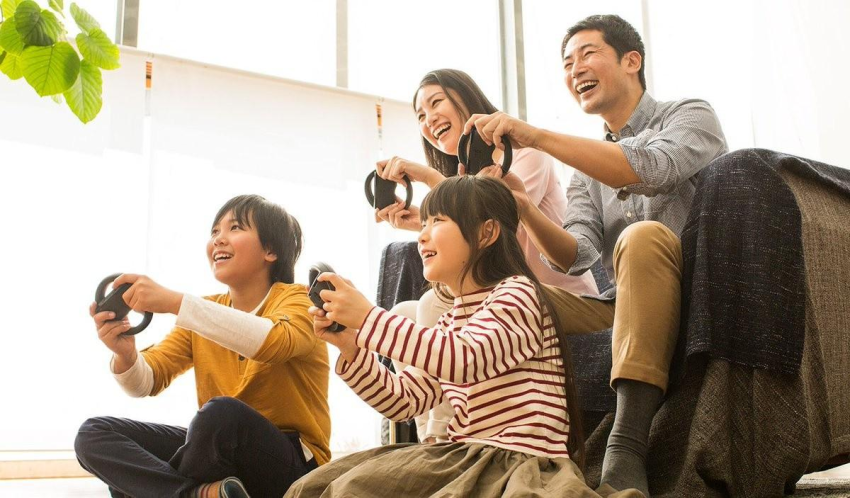
Bringing Everyone Together Through Interactive Gaming
In the Philippines, family gatherings are rarely quiet affairs. Whether it is a weekend reunion in Metro Manila, a birthday celebration in Cebu, a Christmas party in Davao, or a relaxed Sunday afternoon in a provincial home, Filipinos have a special way of turning ordinary occasions into lively social events. Food, music, laughter, karaoke, and friendly competition are often at the heart of these gatherings.
But what if there were another way to make these moments even more entertaining? Imagine grandparents swinging virtual tennis rackets, children dancing to colourful rhythm games, and cousins competing in a virtual bowling tournament without needing to sit in front of a television holding complicated controllers.
This is the appeal of motion-controlled gaming.
Unlike traditional video games that mainly rely on buttons, joysticks, and complicated combinations, motion-controlled games allow players to interact with digital environments through physical movements. A simple arm swing, hand gesture, body movement, or dance step can become part of the game.
As gaming technology continues to evolve, motion-controlled entertainment could find an interesting place in Filipino households, where social interaction and shared activities are already an important part of everyday life.
What Exactly Makes Motion-Controlled Gaming Different?
Traditional console gaming usually requires players to learn button layouts and understand how different controls work. For experienced gamers, this is second nature. For someone who rarely plays video games, however, remembering which button to press can make the experience intimidating.
Motion-controlled gaming takes a different approach.
Instead of relying entirely on buttons, these systems use cameras, motion sensors, accelerometers, gyroscopes, or specialised controllers to recognise physical actions. When someone moves their arm, turns their body, or performs a particular gesture, the game translates that movement into an action on the screen.
For example, a player might swing a controller to hit a virtual tennis ball or move their entire body to follow the rhythm of a song.
This makes gaming feel more immediate and physical. People do not necessarily need to understand complicated instructions before joining a match.
For Filipino families, this simplicity could make a big difference. A relative who has never owned a gaming console might be much more comfortable trying a virtual dance challenge than learning a complicated role-playing game.
The result is a gaming experience that feels less like an individual hobby and more like a shared family activity.
Why Filipino Family Gatherings Are Perfect for Motion Gaming
Filipino culture places considerable importance on spending time with extended family. Family reunions, birthdays, fiestas, and holiday celebrations often bring together people from different generations.
However, keeping everyone entertained can sometimes be challenging.
Children may prefer mobile games, teenagers might enjoy competitive multiplayer titles, and older family members may prefer conversation or traditional activities. Finding something that appeals to everyone is not always easy.
Motion-controlled games offer an interesting middle ground.
A virtual bowling competition, for instance, can involve players of different ages without requiring advanced gaming skills. A dance game can encourage people to participate even if they have never played a video game before.
The entertainment does not necessarily come from winning. It comes from watching someone attempt an unexpected dance move, laughing at an unusual virtual bowling score, or cheering when a grandparent beats a younger relative.
These moments can become memorable parts of a family celebration.
In a country where gatherings often involve large groups, games that encourage people to interact rather than remain isolated behind individual screens have considerable appeal.
From Virtual Bowling to Dance Battles: Games Everyone Can Enjoy
One of the most attractive features of motion-controlled gaming is the variety of activities it can recreate.
Virtual sports are an obvious starting point. Bowling, tennis, golf, and other familiar activities can be transformed into accessible digital experiences.
A family could organise a small bowling tournament in the living room, with each participant taking turns and competing for the highest score. Nobody needs to travel to a bowling alley or rent sports equipment.
Dance games offer another exciting possibility.
Filipino celebrations frequently feature music, karaoke, and dancing. A motion-controlled dance game fits naturally into this environment. Players can follow on-screen movements, compete for points, and challenge relatives to perform increasingly difficult routines.
There are also rhythm games, fitness challenges, and party games that use physical gestures.
Some experiences encourage players to cooperate rather than compete. Two or more participants might need to coordinate their movements to complete a challenge.
This variety means a single gaming system can provide entertainment for several different occasions.
For example, a family might choose a dance competition during a birthday party, virtual sports during a weekend reunion, and cooperative challenges during a rainy afternoon.
How Modern Gaming Consoles Make Movement More Interactive
Motion-controlled gaming has developed considerably since its early popularity with dedicated motion-sensitive controllers.
Modern gaming platforms use different technologies to recognise player movements. Some controllers contain built-in motion sensors, while other systems use cameras or external accessories.
Nintendo has helped make motion-based entertainment familiar to mainstream audiences through systems such as the Nintendo Switch and its motion-sensitive Joy-Con controllers.
Players can use these controllers in games that simulate sports, dancing, and other physical activities. Their relatively simple interaction style makes them particularly suitable for casual multiplayer entertainment.
Other gaming platforms have explored camera-based tracking and virtual reality, creating more immersive experiences.
For Filipino consumers, the most important consideration may not be which console has the most advanced technology. It may be which system offers enjoyable games, easy controls, and enough multiplayer options to keep everyone involved.
Price also matters. Gaming devices can represent a significant household purchase, so families are likely to compare available games, accessories, and long-term value before deciding.
The Importance of Reliable Power During Long Gaming Sessions
A lively family gaming session can last much longer than expected.
One round of virtual bowling may turn into a tournament. A short dance challenge may become an entire evening of music and competition. When several people are taking turns, the console and its accessories need to remain ready throughout the event.
Power management therefore deserves attention.
Many modern gaming systems use rechargeable wireless controllers, while portable gaming devices rely on internal rechargeable batteries. Players may need to charge their accessories between sessions or keep suitable charging equipment nearby.
For portable systems, battery performance can directly affect how long people can enjoy their favourite games away from a power outlet.
This is particularly relevant when families bring gaming equipment to reunions, holiday trips, or gatherings outside their homes.
When considering replacement components or long-term maintenance, the correct game console battery is an important detail for compatible devices. Battery specifications, voltage, connector design, and model compatibility should always be checked before purchasing a replacement.
A reliable power setup helps prevent an entertaining evening from being interrupted by unexpected charging problems.
Can Motion Gaming Encourage Families to Move More?
Another interesting aspect of motion-controlled gaming is its relationship with physical activity.
Traditional gaming is often associated with sitting for extended periods. Motion-based experiences introduce movement into the entertainment process.
Players may stand, stretch, swing their arms, step from side to side, or follow dance routines.
Although these activities should not automatically be considered substitutes for regular exercise, they can make movement feel more entertaining.
For children who spend considerable time using smartphones or tablets, an interactive game might offer a different way to enjoy screen-based entertainment.
Parents can also participate instead of simply watching their children play.
Imagine a family competition in which everyone has to complete a short dance routine. The person with the highest score might receive a small prize, while the funniest performance wins a separate award.
The activity becomes a combination of gaming, movement, and social interaction.
However, families should still pay attention to available playing space. Motion-controlled games can involve sudden movements, so furniture, fragile objects, pets, and other obstacles should be kept away from the playing area.
The Philippines’ Growing Interest in Home Entertainment
Home entertainment has become an increasingly interesting part of the consumer electronics market in the Philippines.
Streaming services, smart televisions, wireless speakers, smartphones, and gaming devices give households more ways to enjoy digital content without leaving home.
For families dealing with busy schedules, home-based entertainment offers convenience.
A motion-controlled gaming system could complement these existing devices. Instead of simply watching a film or scrolling through social media, family members can participate in an activity together.
Internet access also creates additional opportunities. Some games support online multiplayer features, allowing relatives who live in different cities to participate in shared digital experiences.
For example, family members in Manila, Cebu, and Davao could potentially compete in compatible online games even when they cannot meet physically.
Not every motion-controlled experience requires an internet connection, however. Offline party games can be especially useful during gatherings where network quality is inconsistent.
This flexibility could make motion gaming attractive to households with different entertainment habits and internet conditions.
What Should Filipino Families Consider Before Buying?
Although motion-controlled gaming sounds appealing, choosing the right equipment requires some thought.
First, families should consider the number of people who will participate. A system with suitable local multiplayer games may offer better value for households that regularly organise gatherings.
Second, they should check the available game library. A console might have impressive hardware, but its entertainment value depends heavily on whether it offers games that everyone actually wants to play.
Third, available space matters. Some games require players to stand several steps away from a television or camera. Smaller apartments may need more careful arrangements.
Fourth, families should compare the total cost. The console itself is only part of the expense. Additional controllers, charging accessories, games, and replacement components can increase the overall budget.
Battery condition is another consideration for devices that rely on rechargeable power. A compatible game console battery can help restore the intended operation of a device when its original rechargeable battery eventually loses capacity. Buyers should always verify the exact model and technical specifications rather than choosing a replacement based only on appearance.
Finally, parents should consider age ratings and choose games that are appropriate for younger players.
A little preparation can make the difference between an expensive gadget that rarely gets used and an entertainment system that becomes a regular part of family life.
Could Motion Gaming Become a New Party Tradition?
Technology trends often become more interesting when they connect with existing cultural habits.
In the Philippines, karaoke is a good example. It is more than a way to listen to music; it is a social activity that encourages participation, friendly competition, and shared laughter.
Motion-controlled gaming has similar potential.
A virtual dance battle could become a new party tradition. A bowling competition could replace a conventional board game for an evening. A cooperative game could give cousins and grandparents something enjoyable to do together.
The appeal is not necessarily about having the newest or most expensive console.
It is about finding technology that creates opportunities for people to interact.
As gaming systems become easier to use and multiplayer experiences continue to develop, motion-controlled entertainment may become an appealing option for Filipino households looking for fresh ways to enjoy their free time.
Keeping the Fun Going Beyond One Gaming Session
The best family entertainment devices are usually the ones people continue using long after the excitement of opening the box has disappeared.
For motion-controlled consoles, that means having a selection of games suitable for different ages, occasions, and interests.
A family might begin with sports games, discover a favourite dance title, and eventually explore cooperative adventures. Over time, the console can become part of birthday celebrations, holiday reunions, and ordinary weekends.
Taking care of the equipment also helps extend its useful life. Controllers should be stored properly, charging accessories should be kept organised, and rechargeable components should be replaced with compatible products when necessary.
For portable gaming systems that use replaceable internal power components, selecting the right game console battery can be part of maintaining reliable performance over the long term.
Ultimately, the most exciting development in motion-controlled gaming may not be the sensors, cameras, or advanced graphics. It is the possibility of bringing people together through technology.
In a country where family connections and social celebrations are deeply valued, a little friendly competition on the living room floor might be exactly what makes the next gathering unforgettable.