The King of Fruits Gets an Unexpected Technology Upgrade
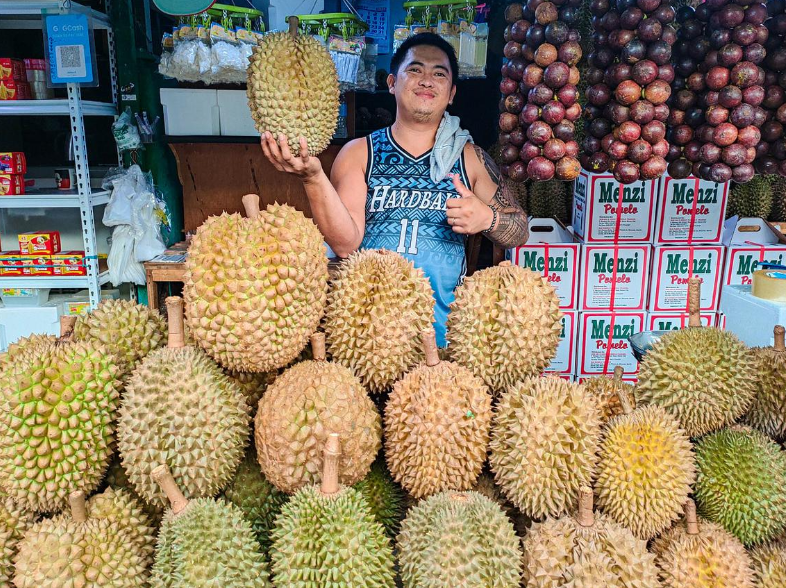
Imagine standing in a fruit market in Davao, looking at a pile of durians. Their thick, spiky shells look almost identical, but what is happening inside each fruit could be completely different. One might be perfectly ripe, another could still be hard and tasteless, while a third might already be overripe.
Traditionally, choosing a good durian requires experience. Buyers and sellers examine the stem, inspect the spikes, smell the fruit, and sometimes tap its shell to listen for a particular sound. Experienced traders can make surprisingly accurate judgments, but the process is not always consistent.
Now, artificial intelligence is offering a new way to solve this familiar problem.
Researchers from the University of the Philippines Mindanao have developed an AI-powered technology called AIDurian. It can evaluate durian maturity and quality without cutting open the fruit. By combining computer vision, acoustic analysis, and deep learning, the system attempts to discover what is happening inside a durian while leaving its protective shell untouched.
For a country where durian is an important agricultural product, this development could be more than an interesting laboratory experiment. It may eventually change how farmers, traders, processors, and consumers approach one of the Philippines’ most recognizable tropical fruits.
Why Choosing a Good Durian Is More Difficult Than It Looks
Durian has a special place in Southeast Asian food culture. Its strong aroma, creamy texture, and distinctive flavor attract devoted fans, although its smell can be challenging for first-time eaters.
In the Philippines, Davao Region is particularly associated with durian production. Local markets, roadside fruit stalls, farms, and food businesses all contribute to an industry that serves domestic consumers as well as international buyers.
According to information released by the Department of Science and Technology in October 2026, the Philippines produces at least 80,000 metric tons of fresh durian annually, generating almost PHP 6 billion in production value.
That is a substantial industry, and fruit quality matters at every stage.
A farmer needs to know when a durian is ready for harvesting. A distributor wants fruit that can survive transportation without becoming damaged or overripe. A retailer needs to offer customers a satisfying eating experience. Exporters must also maintain consistent quality to meet market expectations.
The problem is that traditional inspection depends heavily on human judgment.
A skilled durian trader may recognize subtle differences in the fruit’s appearance and sound. However, another person might interpret the same signals differently. When large quantities of fruit need to be checked during busy harvest periods, this inconsistency can become a serious challenge.
Opening every durian to inspect its flesh is obviously not a practical solution. It damages the fruit, creates additional waste, and makes it difficult to sell the product as fresh, unopened fruit.
This is exactly the kind of problem that non-invasive technology is designed to address.
Meet AIDurian: An AI System That Looks Beyond the Spiky Shell
AIDurian stands for an AI-based Non-Invasive Grading System for Durian. Developed by researchers at the University of the Philippines Mindanao, the project aims to make durian assessment faster, more consistent, and less dependent on subjective inspection.
The interesting part is that the machine does not need to break the shell or taste the fruit.
Instead, it combines several different types of information.
First, computer vision examines the fruit’s external appearance. Cameras and image-processing technology can identify visual characteristics, including shape and surface defects.
Second, acoustic analysis studies the sound produced when the durian is tapped. This is particularly interesting because tapping is already a familiar technique used by experienced durian sellers. The AI system essentially turns this traditional practice into measurable digital information.
Third, deep learning helps the system recognize patterns in the collected information and use them to classify the fruit.
By bringing these methods together, AIDurian can assess characteristics such as maturity, acoustic ripeness, surface defects, locule count, and fruit shape.
Locules are the internal compartments where durian flesh develops. Their number and arrangement are useful characteristics when evaluating the fruit.
Rather than relying on one signal, the technology combines several clues to build a more comprehensive picture.
It is similar to having an experienced fruit inspector who can examine, listen, and analyze information simultaneously, except the observations are processed by a computer.
How Can a Machine Understand a Durian Without Opening It?
The technology becomes even more fascinating when we consider how it processes information.
Step One: The Camera Examines the Fruit
The first stage involves visual inspection.
A camera captures images of the durian, allowing the system to examine its exterior. Shape, visible defects, and other surface characteristics can provide useful information about the fruit.
For example, damaged areas may indicate that the fruit has experienced rough handling. Differences in shape may also help distinguish one fruit from another.
However, appearance alone cannot reliably reveal everything happening inside a durian.
Two fruits can look almost identical on the outside while having different maturity levels. That is why AIDurian does not depend entirely on photography.
Step Two: The Machine Listens to the Sound
This is probably the most surprising part of the entire system.
People who regularly buy durians sometimes tap the shell and listen carefully. The resulting sound can provide clues about the fruit’s internal condition.
AIDurian uses acoustic analysis to turn this familiar technique into a digital assessment process.
Instead of simply describing a sound as hollow or dull, the system collects acoustic information and allows its algorithms to identify patterns associated with different fruit conditions.
This does not mean that every durian produces one magical sound that reveals its quality perfectly. Natural differences between fruits, tapping positions, and environmental noise can all influence measurements.
The advantage of an AI-based approach is its potential to make the evaluation more systematic and repeatable.
Step Three: Deep Learning Connects the Clues
After collecting visual and acoustic information, the system uses deep learning to interpret the results.
Deep learning is a type of artificial intelligence that learns patterns from examples. During development, algorithms are trained using data so they can recognize differences between categories.
For durian inspection, these categories can include maturity levels and different quality characteristics.
The computer does not understand the fruit in the same way a human does. Instead, it learns statistical relationships between measurable signals and the classifications provided during training.
When enough useful information is available, the system can generate an assessment without requiring the fruit to be opened.
This combination of imaging, sound, and machine learning is what makes AIDurian particularly interesting.
The Numbers Behind the Technology Are Impressive
AIDurian is not simply an imaginative concept. The project’s reported testing results provide an indication of its potential.
According to the Philippine Department of Science and Technology, the system achieved more than 80% accuracy in maturity classification and acoustic ripeness assessment.
Its reported defect detection accuracy reached 93%, while locule analysis approached 98%.
These figures suggest that different parts of the system can perform useful inspection tasks without physically damaging the fruit.
However, accuracy figures should always be interpreted in context. Performance in testing does not automatically guarantee identical results across every durian variety, growing location, weather condition, or commercial environment.
Further validation under different operating conditions will be important before widespread adoption.
Even so, the results offer an encouraging example of how Philippine researchers are applying artificial intelligence to a problem that directly affects local agriculture.
Two Digital Tools Bring Durian Inspection Closer to the Real World
Another interesting feature of AIDurian is that the project includes two prototype platforms designed for different situations.
The first is Inspection of Durian Using AI, known as INDAI. It is a mobile application intended for field-level inspection and decision support.
This approach is particularly useful to imagine in a farming environment. Instead of requiring every inspection to take place inside a specialized laboratory, a mobile-based platform could help bring digital assessment closer to where the fruit is harvested and handled.
The second platform is called DuDONG, short for Durian Desktop-Oriented Non-Invasive Grading System.
As its name suggests, this desktop application is designed for more comprehensive analysis.
Together, the two platforms show how AI technology can serve different parts of the agricultural supply chain.
A farmer might benefit from convenient field inspection, while a processor or research team could use a desktop system for more detailed evaluation.
The long-term objective is not necessarily to replace every experienced durian trader. Rather, it is to provide an additional source of information that can support better decisions.
What Does This Mean for Davao’s Durian Farmers?
For farmers in Davao and surrounding agricultural communities, the most important benefit of this technology could be improved consistency.
Harvesting at the wrong time can create problems throughout the supply chain.
If fruit is harvested too early, consumers may be disappointed by its texture and flavor. If it is harvested too late, transportation and storage become more challenging.
A more reliable assessment system could help farmers make better decisions about harvesting and sorting.
It could also help cooperatives organize large quantities of fruit more efficiently. When many farmers deliver their harvest during busy periods, consistent grading becomes especially valuable.
For processors, better sorting could make it easier to select suitable fruit for different products.
For retailers, more consistent quality could help build customer confidence.
There is also a potential economic benefit. If better inspection reduces the number of incorrectly graded fruits, farmers and businesses may be able to avoid some preventable losses.
However, technology alone cannot solve every agricultural problem. Storage facilities, transportation infrastructure, training, market access, and reliable electricity remain important.
AIDurian should therefore be viewed as one part of a broader effort to modernize the durian industry.
Why Sensors and Testing Equipment Matter in Agricultural AI
Behind an intelligent inspection system is a collection of electronic components that must work together reliably.
Cameras, microphones, processors, communication modules, and other electronic devices all play important roles in collecting and processing information.
For agricultural technology, the operating environment can be demanding. Equipment may be used in farms, packing facilities, warehouses, and locations where temperature, humidity, and dust conditions are different from those of a normal office.
This makes dependable measurement and testing especially important.
Engineers need to check whether sensors are producing stable readings, whether electronic circuits are functioning correctly, and whether communication between different components is reliable.
In this context, a test equipment battery can support portable diagnostic instruments used by technicians and engineers. These instruments may be needed when checking electronic systems outside a conventional laboratory, particularly when working around agricultural facilities or field installations.
The development of agricultural AI also highlights an interesting connection between two industries: smart farming and electronic measurement technology.
As more farms adopt connected devices, the need for reliable testing, calibration, and maintenance equipment may grow alongside the demand for intelligent agricultural systems.
A test equipment battery can be relevant to portable measurement tools that technicians carry when inspecting sensors, control circuits, and other electronic equipment. Reliable power helps these instruments remain available during fieldwork, where convenient access to electrical outlets cannot always be assumed.
This does not mean that AIDurian itself is powered by such a battery. Rather, it illustrates how supporting electronics and testing equipment contribute to the wider ecosystem of agricultural innovation.
Could AI Eventually Change How Filipinos Buy Durian?
Imagine walking into a supermarket or fruit shop and seeing a small digital inspection station beside a display of durians.
A customer selects a fruit, places it under a camera, and waits a few seconds while the system evaluates its external characteristics and acoustic response.
A screen then displays an estimated maturity category and selected quality information.
This is an interesting possibility for the future, although AIDurian is currently a research and prototype initiative rather than a widely available consumer service.
If the technology becomes commercially practical, it could make fruit selection more transparent.
Customers would not need to depend entirely on the seller’s judgment. Retailers could potentially use digital grading information to organize products according to maturity and expected handling requirements.
For Filipino consumers who enjoy buying durian from roadside stalls or local markets, such a development could make shopping more interesting.
Still, the human experience of choosing fruit should not disappear.
People may continue to rely on aroma, taste, personal preferences, and recommendations from trusted sellers. AI would simply offer another tool to support the decision.
The most successful approach may be a combination of traditional knowledge and modern technology.
What Challenges Must Be Solved Before Wider Adoption?
Despite its promising results, AIDurian still faces practical questions.
One challenge is the diversity of durian varieties. Different varieties can have different shapes, shell characteristics, flesh textures, and maturity patterns. An AI system must be trained and validated using sufficiently representative data.
Another challenge is environmental variation. Lighting conditions, background noise, handling methods, and differences between farms could influence inspection results.
The system must also be convenient enough for everyday users. A sophisticated technology will have limited value if farmers find it expensive, difficult to operate, or unsuitable for their working conditions.
Cost is another important consideration. Small farms and cooperatives may need affordable equipment and accessible technical support before adopting digital grading solutions.
Finally, users must understand what the system can and cannot tell them. An AI-generated classification is an assessment based on available information, not an absolute guarantee of taste or quality.
Continued testing, training, and collaboration with farmers will be essential.
A Small Fruit Could Inspire a Big Agricultural Technology Shift
The story of AIDurian shows that some of the most interesting applications of artificial intelligence are not necessarily found in smartphones, robots, or expensive consumer gadgets.
Sometimes, innovation begins with an everyday problem.
In this case, the challenge is choosing a good durian without destroying the fruit in the process.
By combining cameras, acoustic analysis, and deep learning, researchers at the University of the Philippines Mindanao have demonstrated how technology can support a more objective approach to fruit grading.
The project also highlights the importance of local research. Instead of simply importing technological solutions developed for other markets, Philippine researchers are creating systems that respond to the needs of local agricultural industries.
As smart farming develops, portable diagnostic instruments and dependable electronic components will remain important parts of the ecosystem. A test equipment battery is one example of the supporting technology that can help power field-based testing and measurement activities.
Perhaps the next time someone buys a durian in Davao, the familiar tapping ritual will have a new competitor: an intelligent machine that can examine the fruit, analyze its signals, and offer an assessment without ever opening its spiky shell.
That is a fascinating glimpse of how artificial intelligence could make the future of Philippine agriculture a little smarter.