Understanding What Is a Button Cell Battery
A button cell battery is a small, round power source commonly used in compact electronics, such as watches, calculators, key fobs, and hearing aids. These tiny batteries are valued for their long shelf life and stable voltage, which makes them ideal for devices that require a consistent, low-power supply. Understanding what is a button cell battery is crucial for anyone who relies on portable gadgets, as it helps in selecting the right type and ensuring proper usage.
Exploring Button Cell Battery Sizes
Button cell battery sizes vary depending on the device’s power requirements. These sizes are usually indicated by a combination of letters and numbers, representing diameter and height. For instance, LR44, CR2032, and SR626SW are some of the popular sizes you may encounter. Choosing the correct button cell battery size is essential because even a small mismatch can prevent the device from functioning correctly or reduce battery life. Users in the Philippines often find it convenient to have a set of commonly used sizes at home for replacement purposes.
How to Charge Button Cell Battery Safely
While many button cell batteries are designed for single-use, certain rechargeable types, such as lithium-ion or nickel-metal hydride models, can be recharged. Knowing how to charge button cell battery safely prevents accidents and prolongs battery life. Always use a charger that matches the battery’s voltage and type. Avoid overcharging and never attempt to charge a non-rechargeable battery, as this could cause leakage, overheating, or even explosion. For rechargeable versions, following the manufacturer’s guidelines ensures both safety and optimal performance.
How to Test Button Cell Battery with Multimeter
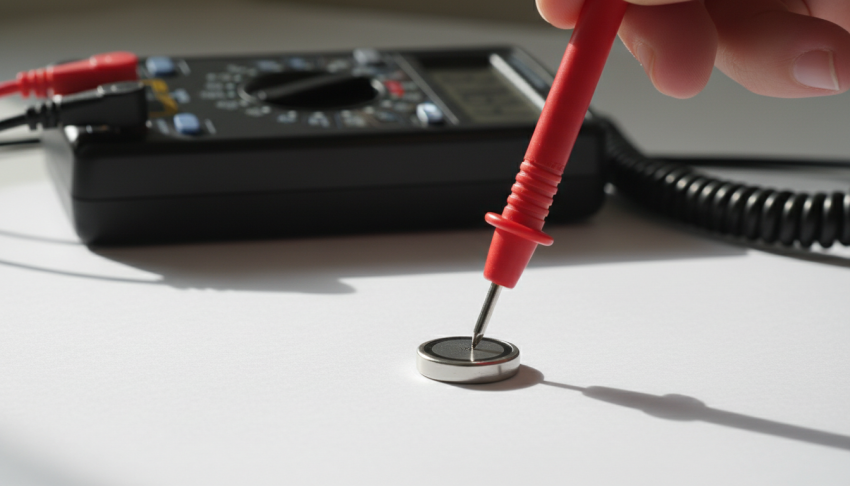
To maintain the efficiency of your devices, it’s useful to know how to test button cell battery with multimeter. This process is straightforward: set your multimeter to the DC voltage setting, touch the positive probe to the battery’s top and the negative probe to the bottom. A fully charged battery should read close to its nominal voltage. Regular testing helps identify weak or depleted batteries before they stop powering critical devices, saving time and avoiding interruptions.
Practical Tips and Extra Considerations
Beyond charging and testing, proper storage and handling of button cell batteries are vital. Keep them in a cool, dry place and away from children, as these small batteries pose a swallowing risk. Additionally, for those in the Philippines, environmental disposal is an important aspect to consider. Used button cell batteries should never be thrown into general trash; instead, they should be recycled at designated collection points to prevent environmental contamination. Awareness of local recycling programs ensures responsible disposal and contributes to sustainability.
Mastering the Use of Button Cell Batteries
Understanding what is a button cell battery, the differences in button cell battery sizes, and knowing how to charge button cell battery or how to test button cell battery with multimeter empowers users to maintain their devices efficiently. With proper knowledge, storage, and disposal practices, these tiny powerhouses can reliably serve your electronics for a long time, making life easier and more convenient, especially for tech-savvy users in the Philippines.